I’m not exactly sure how I’d incorporate both techniques into the same rendering system though.
My method doesn’t use letters, numbers or punctuation characters, mine uses the DOS mode block characters, blank space, 25%, 50%, 75% halftone characters, and the 100% solid block character.
I could probably get a little closer to sharper shape edges with my method if I add in the upper half block and lower half block characters, but when using those characters I’m no longer able to use the halftone dithering and would be limited to 8 background and 16 foreground colors…
I dunno where I’d really even start (over) again to use alphanumeric characters with my text rendering method…
Yeah, I don’t think that’s particularly feasible with my prime directives in coding things meant to render on a potato. If I’m ever gonna revisit that old code again, I want it to continue to be able to run on old-school 286 CPUs, real raw hardware.
Like sure I don’t mind writing old QBasic/QuickBasic code under an emulator, but if I’m writing on such an antiquated language for legacy hardware, I wanna be able to transfer it to a floppy disk and run it on actual hardware from the era.
Other than that, going back to the good old days, I don’t see much reason to do such coding on modern systems. Though I will say this much, neofetch and the newer fastfetch are pretty awesome character based sysinfo utilities!
I just don’t see myself trying to jump through conversion hoops such as ASCII to ANSI for such a project to even keep me awake…


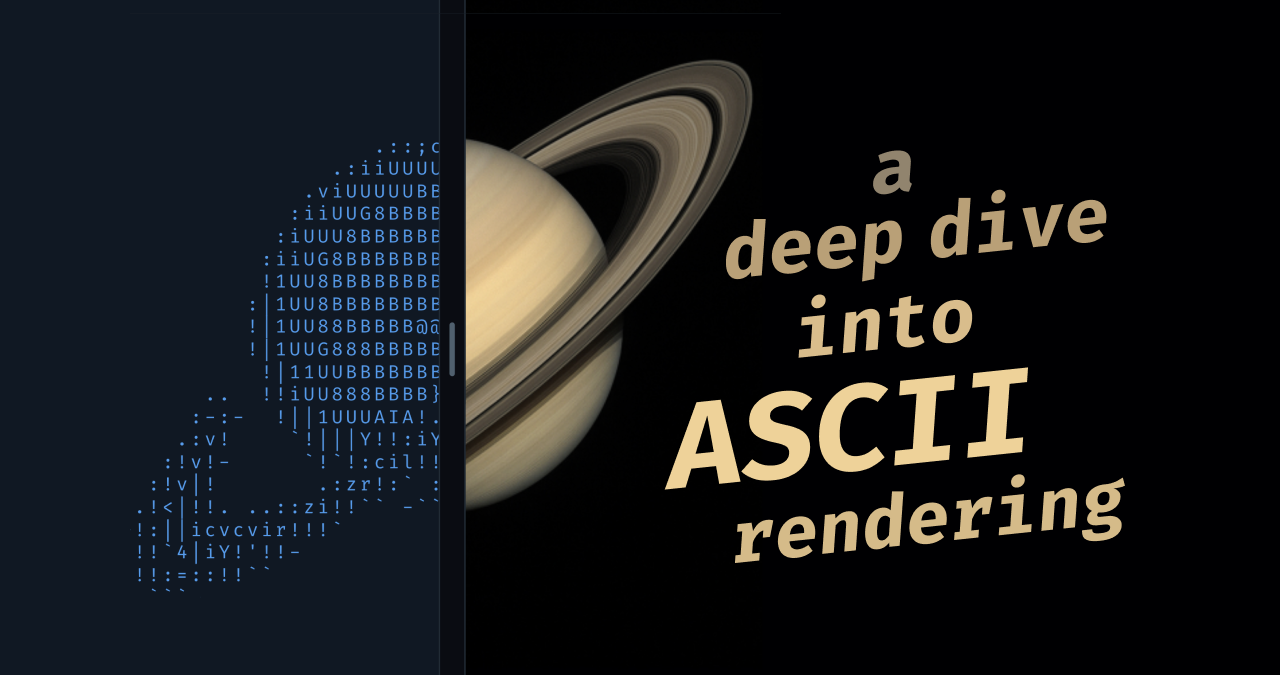
I’m not exactly sure how I’d incorporate both techniques into the same rendering system though.
My method doesn’t use letters, numbers or punctuation characters, mine uses the DOS mode block characters, blank space, 25%, 50%, 75% halftone characters, and the 100% solid block character.
I could probably get a little closer to sharper shape edges with my method if I add in the upper half block and lower half block characters, but when using those characters I’m no longer able to use the halftone dithering and would be limited to 8 background and 16 foreground colors…
I dunno where I’d really even start (over) again to use alphanumeric characters with my text rendering method…
Maybe converting the DOS blocks to ANSI blocks. But i don’t know if this is feasible with your coding…
Yeah, I don’t think that’s particularly feasible with my prime directives in coding things meant to render on a potato. If I’m ever gonna revisit that old code again, I want it to continue to be able to run on old-school 286 CPUs, real raw hardware.
Like sure I don’t mind writing old QBasic/QuickBasic code under an emulator, but if I’m writing on such an antiquated language for legacy hardware, I wanna be able to transfer it to a floppy disk and run it on actual hardware from the era.
Other than that, going back to the good old days, I don’t see much reason to do such coding on modern systems. Though I will say this much, neofetch and the newer fastfetch are pretty awesome character based sysinfo utilities!
I just don’t see myself trying to jump through conversion hoops such as ASCII to ANSI for such a project to even keep me awake…